
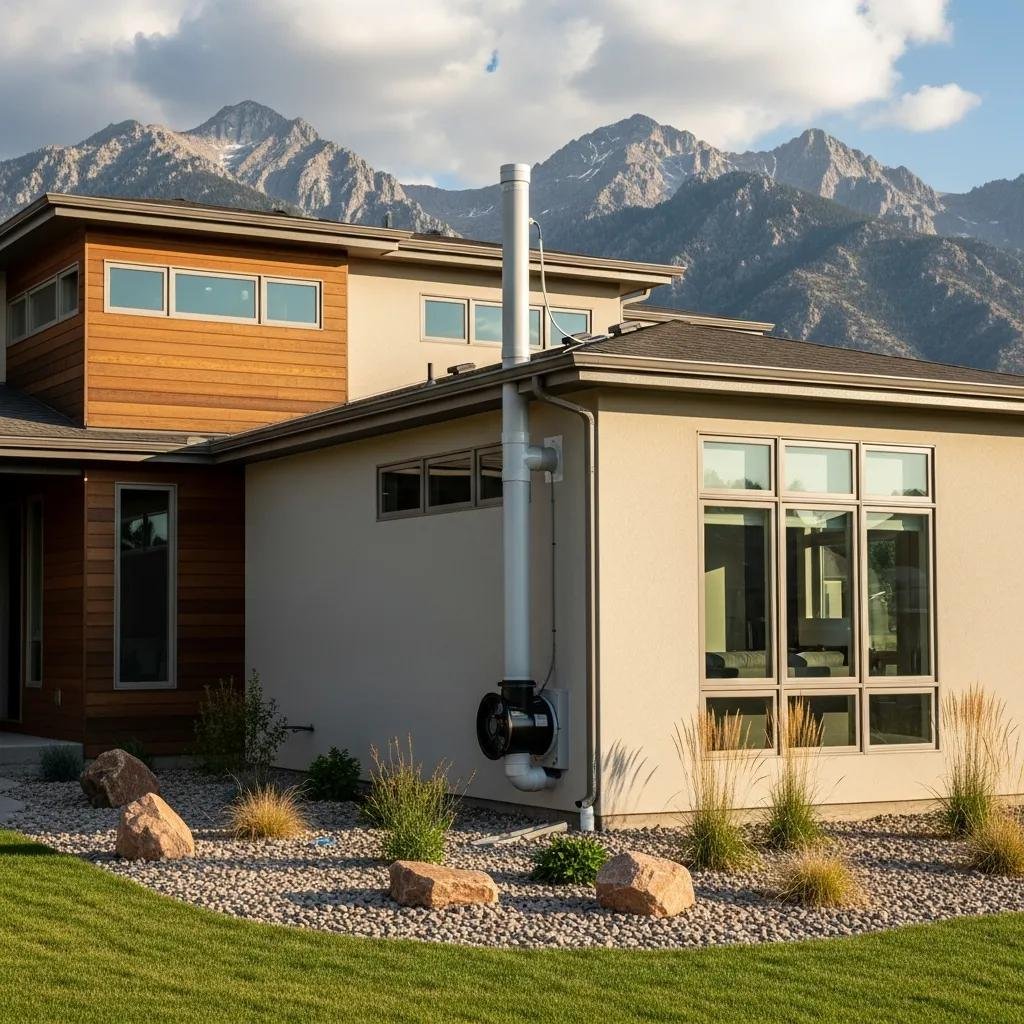
Denver Radon Mitigation Systems: Protect Your Home and Health
Radon is a colorless, odorless radioactive gas that seeps from soil and rock into buildings, and in Denver it presents a measurable local risk due to regional geology and housing types. Recent regional data show a substantial share of Colorado homes can exceed the EPA radon action level of 4.0 pCi/L, making radon mitigation and testing central to protecting indoor air quality and reducing lung cancer risk. This guide explains what radon is, why Denver homes are at elevated risk, how to test accurately, and which radon mitigation systems work best for basements, slab-on-grade, and crawlspaces. You will learn clear steps for choosing professional radon testing, typical cost ranges, and what to expect during installation and follow-up testing. Practical checklists, comparison tables, and troubleshooting tips will help homeowners plan mitigation with confidence and know when to request professional services.
Indeed, active soil depressurization systems have a proven track record, with hundreds of installations already implemented in Denver homes to manage indoor air quality.
Denver Radon Mitigation: Sub-Slab Depressurization
Active soil depressurization systems have been installed in over 300 residential homes in Denver, Colorado to control indoor air concentrations of 1,1 DCE resulting from migration of
Efficacy of sub-slab depressurization for mitigation of vapor intrusion of chlorinated organic compounds, 2002
What Are the Dangers of Radon Gas in Denver Homes?
Radon is a radioactive decay product of uranium in soil and rock that becomes an indoor air hazard when it accumulates to elevated concentrations, increasing lifetime lung cancer risk. The mechanism is straightforward: radon and its short-lived progeny emit alpha particles when inhaled, which can damage lung tissue and DNA over repeated exposures. Public health agencies identify radon as the second-leading cause of lung cancer after smoking, and local studies indicate Colorado has higher-than-average indoor radon prevalence tied to Rocky Mountain geology. Homeowners should treat elevated radon as a preventable environmental health risk and follow testing and mitigation guidance to reduce exposure. The next subsection defines radon origins and common home entry pathways to clarify where mitigation should focus.
What Is Radon Gas and How Does It Enter Homes?
Radon originates from the natural decay of uranium in soil, rock, and some building materials, and behaves as a gas that migrates through pores in soil and cracks in foundations. Pressure differentials between a building interior and the soil—created by heating, ventilation, or mechanical systems—draw soil gas, including radon, into living spaces through gaps in slabs, foundation joints, sump pits, and drain tiles. In Denver homes with basements or slab-on-grade foundations, the most common pathways are sub-slab cracks and unsealed utility penetrations; in crawlspaces, sub-membrane suction is often necessary to control soil gas. Understanding these pathways is essential because mitigation targets the source and routes of entry—usually by depressurizing the soil under the foundation or sealing entry points to reduce airflow.
The following section explains why Colorado’s geology makes radon a particularly significant local concern.
Why Is Radon a Significant Health Risk in Colorado?
Colorado’s geology—characterized by uranium-bearing formations and fractured rock in foothill and mountain areas—contributes to a higher incidence of indoor radon in many communities, including Denver. State surveillance and EPA data show that a notable percentage of Colorado homes test above the 4.0 pCi/L action level, translating into an increased burden of radon-attributable lung cancer in the state. Vulnerable groups include non-smokers exposed to long-term elevated radon, as well as households with children and pets, because cumulative exposure over years increases risk. Public health guidance therefore emphasizes universal testing of homes, prompt mitigation for readings at or above action levels, and periodic retesting after mitigation to verify long-term performance. The testing section that follows outlines practical testing options and cost expectations for Denver homeowners.
How to Test for Radon in Denver: Methods and Costs

Testing is the only reliable way to determine indoor radon levels, and selecting the right test depends on timing, accuracy needs, and whether diagnostic follow-up is required. Short-term tests provide quick snapshots and are useful for initial screening, while long-term tests yield a better estimate of annual average radon exposure; continuous monitors and professional diagnostics offer the highest accuracy for complex situations. Costs vary by test type and provider—DIY kits are low cost, professional short-term tests are higher but include placement and protocol, and continuous monitors or multi-zone testing increase expense. After explaining testing options and cost ranges in the table below, the following subsections compare test types and provide clear local cost guidance so homeowners can choose the right approach.
Different testing methods offer trade-offs in duration, accuracy, and cost; the table below helps compare common options available in Denver.
This comparison shows how duration and purpose influence choice: DIY short-term kits are cost-effective for screening, while professional continuous monitoring is best for detailed diagnostics or post-mitigation verification. The next subsection breaks these options into actionable guidance for homeowners.
What Are the Different Radon Testing Options Available?
There are several practical testing options for homeowners: inexpensive DIY short-term kits, long-term mailed alpha-track detectors, continuous electronic monitors for diagnostic insight, and full-service professional testing that follows EPA protocols. Short-term kits are useful for quick screening during real estate transactions or seasonal checks, while long-term tests (three months or more) better estimate annual exposure because they average seasonal variability. Continuous monitors provide time-resolved data that helps identify daily patterns and confirm mitigation performance; professional testing services add expert placement, chain-of-custody protocols, and interpretation. For homeowners uncertain about readings or with borderline results, professional continuous monitoring is recommended because it reduces uncertainty and guides system design decisions.
How Much Does Radon Testing Cost in Denver?
Testing cost in Denver depends on the test type, number of zones, and whether a professional technician performs placement and interpretation, with typical professional in-home tests commonly ranging from $100 to $250. DIY short-term kits and long-term mail-in detectors offer lower out-of-pocket cost but often lack the protocol rigor of a certified professional test, which can matter in real estate or warranty situations. Public programs and seasonal discounts occasionally reduce costs or provide free kits through community health initiatives, so homeowners should check local outreach channels for offers. For those ready to proceed with professional testing and possible mitigation, Martens Radon provides professional radon testing and radon mitigation system installation services to homeowners in the Denver metro area and foothills; homeowners can request a professional test or a free estimate to move from diagnosis to mitigation when results warrant action.
What Types of Radon Mitigation Systems Are Effective in Denver?
Sub-slab depressurization (SSD) is the primary and most effective mitigation approach for reducing radon beneath slabs and basements by creating a negative pressure field under the foundation and venting soil gas safely above the roofline. Other effective systems include drain tile suction for homes with perimeter drainage, sub-membrane suction for crawlspaces, and targeted sump modifications where sump pits create a direct pathway. System selection depends on foundation type, indoor radon levels, and site-specific soil conditions common to Denver neighborhoods; effectiveness is typically measured as the reduction in pCi/L after system activation. Practical checklists, comparison tables, and troubleshooting tips will help homeowners plan mitigation with confidence and know when to request professional services.
Research further supports the efficacy of sub-slab depressurization in extending the pressure field beneath a foundation, significantly enhancing its ability to mitigate radon.
Sub-Slab Depressurization for Indoor Radon Mitigation
m2 at least triples the minimum sub-slab depressurization predicted at a distance of 30 cm from all the walls. This improvement in the sub-slab pressure field extension provides a large
Relative Effectiveness of Sub‐slab Pressurization and Depressurization Systems for Indoor Radon Mitigation: Studies with an Experimentally Verified Numerical …, AJ Gadgil, 1994
The following table compares common radon mitigation system types used in the Denver area.
This table shows SSD is generally the primary choice for Denver homes with slabs and basements, while crawlspaces and homes with drain tiles may favor specialized approaches. The next subsection lists commonly used systems with short suitability notes to guide quick selection.
Which Radon Mitigation Systems Are Commonly Used?
Common systems include active sub-slab depressurization for slabs and basements, drain tile/perimeter suction when drain systems exist, sub-membrane suction for crawlspaces, and targeted passive venting for new construction. SSD uses a suction point drilled into the slab or an existing sump to withdraw soil gas and route it through PVC piping with an inline fan to discharge above the roofline, which is effective in most Denver foundation types. Sub-membrane systems install a gas-proof liner over the crawlspace subfloor and use a fan to draw air from under the membrane, while drain tile systems leverage existing drainage networks to collect and vent soil gas. Choosing the right system depends on foundation type, access, and measured radon levels, which leads into a breakdown of key system components in the next subsection.
What Are the Key Components of a Radon Mitigation System?
A typical mitigation system comprises a radon-rated fan, PVC vent piping, a suction point or sub-slab port, sealing materials to close entry points, and a monitoring device such as a manometer to indicate system operation. The radon fan creates the negative pressure field required for sub-slab depressurization and typically runs continuously; fans are selected to match system resistance and expected flow. PVC pipes route the exhaust above the roofline to safe dispersion heights, and visible indicators like a manometer or digital monitor help homeowners verify the system is operating. Proper sealing of cracks, utility penetrations, and finished floors improves efficiency and often reduces the number of suction points required, which in turn can lower installation complexity and cost.
How Is a Radon Mitigation System Installed by Professionals in Denver?

Professional installation begins with a thorough site assessment and diagnostic testing to determine radon entry points, soil conditions, and the most effective mitigation strategy for the home. The process typically includes system design, placement of suction points and routing of vent piping, installation of a radon-rated fan, sealing of entry points, and post-installation testing to verify that target levels have been achieved. Licensed professionals will document the work, explain system operation, and provide monitoring guidance; homeowners should expect a clear timeline and transparency about warranty and follow-up testing.
What Is the Typical Radon Mitigation Installation Process?
A standard mitigation installation follows these steps: initial assessment and diagnostic testing to map high-radon zones, system design to choose suction locations and fan placement, slab cutting or sump modification to create suction, routing PVC piping to discharge, sealing cracks and penetrations, and finally post-mitigation testing to confirm performance. Each step typically takes a few hours to a day depending on home size and complexity, and homeowners should expect minimal disruption when installers follow protective measures for finished surfaces. After the fan and piping are operational, a retest is usually performed within days to weeks to ensure levels are below the EPA action threshold; periodic retesting is recommended to confirm long-term performance. Understanding this process helps homeowners plan for scheduling, temporary access, and what to expect during the verification phase.
- Assessment: Technicians map radon concentrations and identify entry points.
- Design: A plan selects suction locations and routes piping.
- Installation: Fans, piping, and sealing are installed, followed by verification testing.
This stepwise approach clarifies homeowner expectations for timeline and verification, leading into guidance on how to choose a qualified installer.
How to Choose a Certified Radon Mitigation Professional in Colorado?
When vetting installers, homeowners should verify credentials, request a written estimate and scope of work, confirm references or local experience, and ask about warranties and post-installation testing protocols. Look for companies that emphasize radon-specific expertise, local knowledge of Denver geology and foundation types, and clarity about monitoring and follow-up testing; these attributes ensure the system is both technically appropriate and maintained. Martens Radon provides professional radon testing and mitigation installation services focused on Denver and the foothills, emphasizing health and safety and a local approach—homeowners can request a free mitigation estimate to compare recommended systems and documented scope of work. Asking for a clear post-installation retest plan and written performance guarantees helps protect homeowners and ensures accountability by the installer.
What Factors Affect Radon Mitigation Costs in Denver?
Mitigation cost varies with foundation type, house size, access to suction locations, soil permeability, number of suction points required, and aesthetic or structural constraints that affect routing. Slab-on-grade and small homes typically require simpler installations and lower cost, while large homes with finished basements, limited access to sub-slab areas, or complex drainage systems raise labor and material needs. Local price ranges reflect these variables, so obtaining multiple free estimates that detail suction points, fan specifications, piping routes, and sealing work is the best way to understand expected costs. The table below breaks down major cost drivers and provides example Denver price ranges to guide homeowner budgeting and comparison shopping.
The table below breaks down common cost drivers for Denver mitigation projects.
This table highlights that foundation type and home complexity are primary cost drivers; obtaining a detailed free estimate helps homeowners compare apples-to-apples. The following subsections describe how home characteristics influence pricing and what to expect from free estimates.
How Do Home Characteristics Influence Mitigation Pricing?
Foundation style, the presence of finished basements or hard-to-access crawlspaces, and the number of living levels all increase installation complexity and cost by requiring more labor, sealing, or additional suction points. A simple slab-on-grade cottage with an unfinished interior may need one suction point and a short pipe run, keeping costs low, while a large finished basement with multiple living spaces can require additional suction points, concealed piping, and extra sealing work. Utility penetrations, sump pits, and existing drain tile systems can either simplify or complicate installation depending on accessibility; installers must evaluate these features during assessment to provide accurate pricing. Clear documentation in a written estimate about suction points, fan model, performance expectations, and post-test procedures reduces surprises and enables meaningful comparisons.
What Are Typical Price Ranges and Free Estimate Options?
Typical Denver mitigation projects often fall within a baseline range that reflects foundation type and complexity, with simpler systems commonly near the lower end and multi-zone or complex installations toward the higher end; homeowners should expect transparent free estimates that include site assessment, proposed system, and anticipated timeline. A high-quality estimate will list the number of suction points, the fan model or performance specification, piping routes, sealing tasks, and the plan for post-installation testing—this level of detail aids direct comparison between providers. Many providers, including local specialists, offer no-cost site visits and written quotes; homeowners should request such assessments and compare scope, not just price, before selecting a contractor. With a clear estimate in hand, homeowners can plan financing or scheduling and move confidently to scheduling installation when radon levels warrant mitigation.
How to Maintain Your Radon Mitigation System for Long-Term Safety
Ongoing monitoring and periodic maintenance ensure the mitigation system continues to keep indoor radon at safe levels; homeowners should establish a simple routine for visual checks, documentation, and scheduled retesting. Typical maintenance tasks include confirming the fan runs continuously, checking the manometer or visible indicator to ensure negative pressure is maintained, inspecting piping for damage, and retesting indoor radon periodically—especially after home renovations or changes in HVAC. Small issues like disconnected piping or failed fans can often be diagnosed quickly; however, professional service is required for fan replacement, system redesign, or recurrent high readings. The subsections below explain post-mitigation testing timelines and common troubleshooting steps to preserve long-term performance.
Why Is Post-Mitigation Testing Important?
Post-mitigation testing verifies that the installed system achieves the intended radon reduction and provides documentation that levels are below action thresholds, usually through a short-term or continuous monitor placed according to testing protocols. The recommended retest window is typically within days to weeks after system activation to confirm immediate performance, followed by periodic testing every two years or after major structural changes; continuous monitors offer ongoing assurance where homeowners want real-time data. A successful mitigation is defined by sustained reductions to levels that meet public health guidance, with documented before-and-after readings included in service records. Confirming performance through testing also supports home resale disclosures and provides peace of mind about long-term indoor air quality.
- Homeowners should perform a post-installation test within 7–30 days to confirm mitigation effectiveness.
- Periodic retesting every two years or after renovations maintains assurance that systems remain effective.
- Continuous monitoring offers real-time alerts and simplifies long-term verification.
These testing practices help homeowners maintain safe indoor environments and point directly to basic troubleshooting steps when readings rise, which the next subsection addresses.
What Are Common Maintenance Issues and Troubleshooting Tips?
Common issues include fan failure, visible drops in manometer readings, disconnected or damaged piping, and new entry points created by renovations; many problems show clear signs and can be triaged by homeowners before calling a professional. Simple homeowner checks include confirming the fan is running (sound or vibration), inspecting the manometer to ensure a suction reading, and visually checking exposed piping for disconnected joints or cracks; if the fan has stopped or readings rise, professional service is recommended to replace the fan or repair the system. Warranties and post-installation support described in the original estimate simplify resolution and protect homeowners against equipment failure; when in doubt, schedule professional diagnostics to avoid prolonged exposure. Homeowners seeking reliable service in the Denver metro and foothills can contact Martens Radon for testing, maintenance, and mitigation estimates to ensure systems remain effective over time.
- Check visual indicator or manometer monthly to ensure system operation.
- Inspect piping and seals after any remodeling or basement work.
- Contact a professional installer for fan replacement or persistent high readings.
This troubleshooting checklist keeps homeowners proactive about system health and links naturally to local professional support options for more complex repairs.