
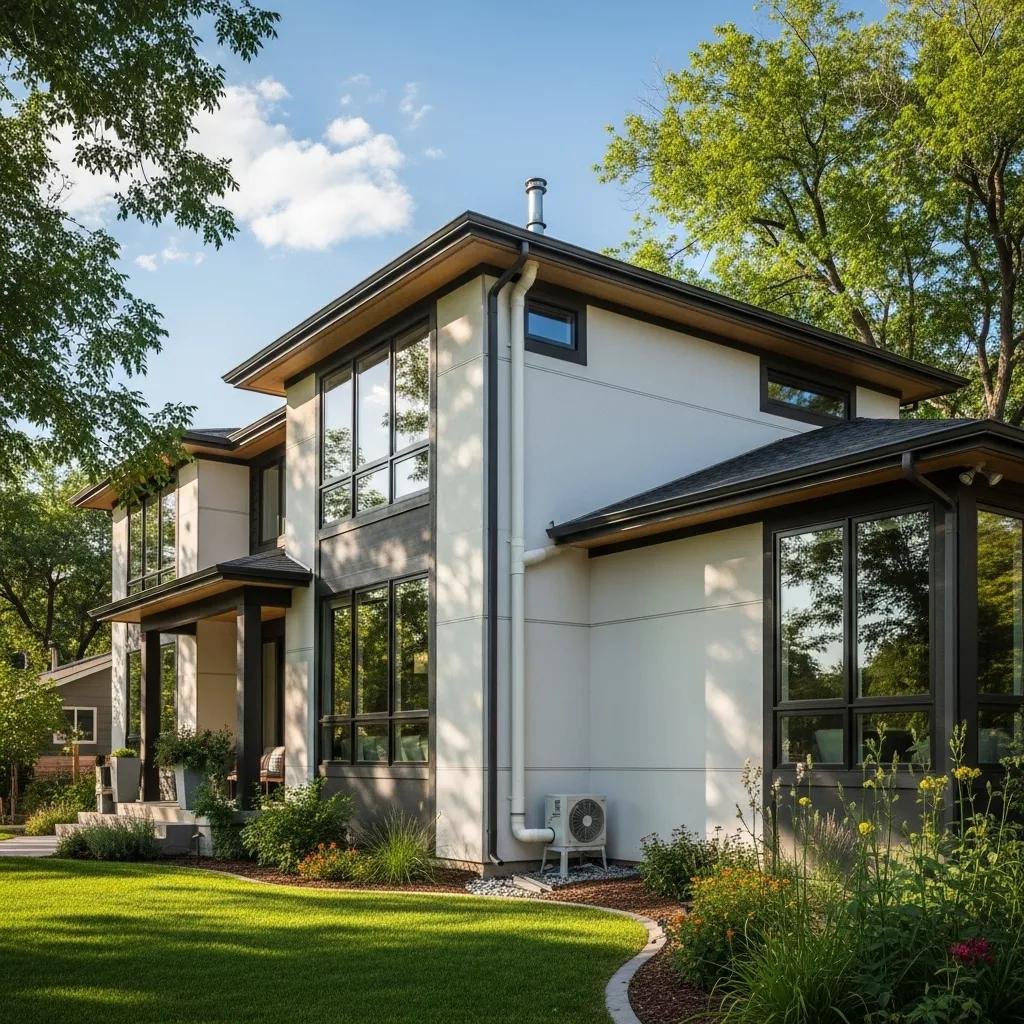
Understanding Denver Radon Mitigation Costs & Value
Radon mitigation reduces lung-cancer risk by lowering indoor radon concentrations through targeted ventilation and sealing measures, and Denver homeowners need a clear picture of costs, options, and long-term value before committing to work. This guide explains typical radon mitigation system cost ranges in the Denver metro and foothills, how foundation type and radon level drive price, the common mitigation system types you’ll encounter, and the ongoing maintenance and testing expenses to expect. You will learn practical, localized price bands for slab, basement, and crawlspace homes, a checklist of factors that increase or lower cost, and the trade-offs among DIY testing, professional testing, and continuous monitors. The article then maps these technical choices to realistic cost expectations, provides comparison tables and concise lists for quick decisions, and shows when a free on-site assessment is the sensible next step. Throughout, keywords like radon mitigation cost, Denver radon mitigation cost, sub-slab depressurization cost Denver, and radon testing Denver cost are used to help you find actionable, region-specific answers.
What Are the Typical Radon Mitigation Costs in Denver?

Typical radon mitigation costs in Denver span a range because system type, foundation access, and job complexity determine final price, but homeowners can expect clear local bands to guide budgeting. For many single-family homes the common retrofit band falls between roughly $1,100 and $2,500 depending on slab access, routing, and whether crawlspace encapsulation is needed. Higher-complexity jobs—multiple foundation zones, hidden utilities, or extensive sealing work—push toward the top of that band or above, while simple passive activation or straightforward sub-slab installations sit near the lower end. The following table summarizes typical system types and Denver price ranges to give an immediate snapshot for planning and comparison.
Introductory table showing common Denver system types and expected price bands:
This table clarifies that sub-slab systems are common and usually mid-range in cost, basement routing tends toward higher labor, and crawlspace encapsulation increases materials and labor substantially. For exact pricing, a site-specific assessment will capture unique conditions like slab thickness and routing constraints that materially change cost estimates.
What Is the Average Price Range for Radon Mitigation Systems in Denver Homes?
Average Denver price ranges depend on foundation and complexity, but a practical local average for standard retrofit installations falls near $1,600–$2,000 for single-zone systems. This average reflects jobs where a contractor can core-drill the slab or route a vent through a basement without unusual structural or HVAC conflicts. Example scenarios illustrate variation: a compact bungalow with slab-on-grade and clear access might be near $1,150, while a multi-level home requiring concealed piping and modest landscaping restoration could approach $2,400. Understanding these examples helps homeowners translate raw price bands into realistic expectations for their property.
These examples also highlight why the final written quote matters: unseen conditions often surface during evaluation, and a precise assessment narrows the range to a single firm price. Accurate on-site diagnosis reduces surprises and leads to predictable budgeting for the homeowner.
How Does Martens Radon Provide Transparent Pricing and Free Assessments?
Martens Radon offers a clear engagement path that converts the local price range above into an exact, written estimate following an on-site evaluation, helping homeowners avoid guesswork. The typical process begins with a free on-site assessment that documents foundation type, radon readings, and routing options; after the visit Martens Radon provides a firm written quote the same day that outlines scope, components, and expected results. Work includes quiet, reliable, discreet system installation choices that preserve home aesthetics, and their offers include lifetime workmanship coverage to protect against installation defects. Independent post-testing is available to verify performance, with retesting offered later at a reduced rate, giving homeowners both transparency and long-term assurance.
Mentioning this provider’s free assessment and same-day written quote clarifies the next step from understanding price bands to receiving a precise evaluation and contract, which helps homeowners move from planning to action with minimal uncertainty.
Which Factors Influence Radon Mitigation Costs in Denver?
Radon mitigation pricing reflects multiple intersecting factors—foundation type, home size, baseline radon level, accessibility, permitting requirements, and aesthetic routing choices—each of which can add labor, materials, or time to a job. Foundation type is often the dominant cost driver because slab, basement, and crawlspace solutions require different components and labor; home size and floor plan complexity increase piping and fan requirements; very high radon readings may need more robust systems or multi-zone approaches; and permit or electrical work adds project fees. Below is an EAV-style table that maps the primary factors to qualitative price impact and rationale for clearer budgeting.
This mapping shows that foundation type and size are primary cost levers, while permits and aesthetics add predictable but smaller costs in most Denver jobs. After understanding these factors, homeowners can prioritize which variables are within their control and which require contractor expertise.
List of the main influences with short explanations:
- Foundation type: Determines system family (sub-slab, basement routing, encapsulation) and primary labor needs.
- Home size and layout: Larger footprints often need longer pipe runs and potentially multi-zone systems.
- Measured radon level: Higher initial readings can require more aggressive mitigation measures and equipment.
- Access and obstructions: Utilities, finished floors, and landscaping constraints add time and specialized work.
How Do Foundation Types Affect Mitigation Pricing?
Foundation variants—slab-on-grade, full basements, and crawlspaces—each call for distinct mitigation strategies that drive cost through different components and labor needs. Slab-on-grade homes commonly use sub-slab depressurization, requiring a core drill, PVC vent pipe, a radon fan, and slab sealing around the suction point; these jobs are often mid-range in cost and relatively predictable when slab access is straightforward. Full basements may involve routing pipes up walls or through rim joists to reach safe discharge paths, which can increase labor and aesthetic routing work, pushing costs higher than a basic slab job. Crawlspaces frequently require encapsulation, drainage considerations, and active ventilation, combining more material and effort and usually producing the highest overall cost among the three foundation types.
The choice of foundation-specific strategy also impacts expected performance and visibility of equipment, which informs homeowner priorities about aesthetics, noise, and placement—factors that can create additional scope and cost if homeowners require discreet routing.
What Role Do Home Size, Radon Levels, and System Complexity Play?
Square footage, multi-zone foundations, and very high radon readings increase system complexity and material requirements, leading to proportionally higher mitigation costs. Larger homes may need longer PVC runs, additional sealing work, or even a second fan if the structure has separate foundation zones, which increases parts and labor relative to single-zone homes. If initial testing shows radon well above the EPA action level, technicians may recommend stronger fans, multiple suction points, or combined strategies (e.g., sub-slab plus crawlspace ventilation), all of which elevate cost. Aesthetic concerns—such as routing through finished living spaces or matching exterior terminations to home design—also add time and materials, pushing estimates upward.
Homeowners should weigh the trade-off between upfront investment and long-term performance: spending more on a well-designed, quiet, and discreet system often reduces the need for future tightening or aesthetic corrections, producing better value over the system’s life.
What Types of Radon Mitigation Systems Are Available and Their Costs?
Mitigation approaches include sub-slab depressurization, basement or block-wall systems, crawlspace encapsulation with active ventilation, and activation of existing passive stacks; each has distinct cost bands and suitability depending on foundation and radon readings. Sub-slab depressurization actively vents soil gas from beneath slabs and is typically the most commonly applied retrofit for slab homes. Crawlspace solutions pair encapsulation materials, moisture control, and active ventilation, raising material and labor costs. Passive systems that exist but haven’t been activated can often be converted to active systems for a lower cost than a full retrofit, but final viability depends on the design of the existing passive stack. The table below summarizes system types, expected Denver cost bands, and when each approach is appropriate.
This comparison clarifies typical cost trade-offs and shows why tailored assessment matters: converting a passive system is often the most cost-effective route when feasible, while encapsulating a crawlspace requires more material and labor and therefore higher investment. When selecting a system, prioritize solutions that reliably reduce radon below the EPA action level while balancing visibility, noise, and longevity.
How Much Does Sub-Slab Depressurization Cost in Denver?
Sub-slab depressurization typically includes a core drill through concrete, a PVC vent pipe routed to above-roof discharge, a radon-rated fan mounted externally or in an attic, and slab sealing around the suction point; typical Denver retrofit costs land in the $1,100–$2,500 band. Component costs (fan, pipe, sealing materials) are a portion of the total; labor for careful routing, roof or wall penetrations, and post-install testing and verification constitute the remainder. Factors that push cost up include thick or heavily reinforced slabs, difficult access preventing easy core drilling, or long/complex pipe runs requiring additional supports and penetrations. After installation, a properly sized sub-slab system usually achieves significant reductions in indoor radon and is the standard solution for many slab-on-grade homes.
Homeowner decisions about fan location, termination aesthetics, and whether to conceal pipe runs can influence final price, so discuss preferences for discretion and noise control during the site assessment to capture any additional costs upfront.
What Are the Prices for Crawlspace Encapsulation and Passive System Activation?
Crawlspace encapsulation pairs a heavy-duty vapor barrier, sealing of vents and penetrations, drainage and sometimes sump integration, and an active ventilation or depressurization system; Denver prices commonly range from $2,000 to $4,500 depending on crawlspace condition and square footage. Materials and labor for taping and sealing the barrier represent a significant share of cost, and added drainage or joist repairs increase job scope. By contrast, activating an existing passive system—adding a fan and completing targeted sealing—often costs considerably less, sometimes under $1,200, provided the passive pathways and access are compatible. When encapsulation plus active ventilation is required, costs combine both material-heavy encapsulation and the mechanical components, producing the upper end of local price bands.
Selecting the right crawlspace approach requires examining moisture conditions and structural issues; addressing dampness and soil gas together creates long-term benefits for indoor air quality beyond radon reduction alone.
What Are the Long-Term Costs and Maintenance Considerations?
Beyond installation, homeowners should budget for modest annual electricity, occasional fan replacement, and periodic retesting to confirm long-term performance; these recurring costs are small relative to installation but important for lifecycle budgeting. Typical continuous-running radon fans have low wattage usage, producing an annual electricity estimate that is measurable yet modest; fans also have finite lifespans and will need replacement within years. A tabular breakdown below shows expected recurring items, frequency, and typical Denver cost expectations to help plan ongoing ownership costs and make informed decisions when comparing bids.
This table demonstrates that operating and maintenance expenses are relatively modest compared with installation, and proactive scheduling of retests and fan checks maintains system effectiveness and homeowner peace of mind. Planning for these items turns one-time investment into predictable long-term household budgeting.
List of maintenance and monitoring recommendations:
- Test after installation and again at 6–12 months to confirm sustained reduction.
- Monitor fan noise and vibration; prompt replacement avoids system downtime.
- Keep records of installation details, fan model, and any permits for future resale or repairs.
How Much Does Electricity Usage Add to Annual Costs?
A typical radon mitigation fan draws modest wattage—often under 100 watts—and runs continuously, so annual kWh consumption translates to a modest electricity cost in Denver. Converting an example fan wattage to annual use, a 60-watt fan running 24/7 consumes roughly 525 kWh per year; at representative local electric rates that equates to approximately $50–$70 annually. Choosing energy-efficient fans and confirming proper sizing reduces both operating costs and noise, while occasional checks ensure the fan runs as designed without undue energy waste. Homeowners concerned about electric impact can ask for fan specifications and suggested efficiencies during the assessment to compare options.
Lower operating cost and quieter fan models may have slightly higher upfront cost but reduce lifetime expense and improve household comfort, so evaluate long-term value rather than only initial price.
What Are Fan Replacement and Retesting Expenses Over Time?
Radon fans generally last seven to ten years depending on model and environmental conditions, and replacement costs typically fall in the $180–$250 range including parts and labor, though prices vary with installation complexity. Retesting is recommended after installation to validate reduction, then periodically—commonly every 2–5 years or after major renovations—to ensure ongoing performance; individual test costs commonly range from approximately $100 to $200 depending on test type. Some mitigation providers offer reduced-rate retesting as part of long-term service plans to encourage verification and catch performance issues quickly. Planning for these periodic expenses prevents performance drift and maintains a documented mitigation history for the home.
A scheduled maintenance plan that includes retesting and a fan replacement timeline helps homeowners avoid surprises and demonstrates responsible long-term stewardship of radon mitigation investments.
What Are the Radon Testing Options and Their Costs in Denver?

Homeowners can choose among DIY short-term kits, professional short-term tests, or continuous radon monitors; each option differs in cost, accuracy, and the use-case where it’s most appropriate. DIY test kits are inexpensive and useful for initial screening, professional short-term tests offer higher accuracy and are recommended for real estate transactions or pre-mitigation decisions, and continuous monitors deliver the most granular data but carry higher rental or purchase costs. The table below compares these options by cost, accuracy, and best use-case to simplify the decision process for Denver homeowners considering radon testing.
This comparison shows that DIY kits are a sensible first step, while professionals and continuous monitors are better for formal verification and complex assessments. For post-mitigation verification, independent testing by a certified third party provides unbiased validation of system performance.
List comparing DIY vs professional testing scenarios:
- DIY kits are best for quick home screening before budgeting mitigation.
- Professional testing is recommended for pre-purchase or pre-mitigation confirmation.
- Continuous monitors provide detailed hourly data useful for troubleshooting or high-variability cases.
How Do DIY Radon Test Kits Compare to Professional Testing Services?
DIY radon test kits are inexpensive and convenient for initial screening, but they lack the controlled conditions and documented chain-of-custody that professional testing provides; accuracy is acceptable for screening but not always sufficient for formal verification. Professional short-term tests performed by a certified technician use calibrated equipment and documented protocols, producing results suitable for real estate or for pre- and post-mitigation verification. Continuous monitors deliver the most robust dataset and reveal daily or seasonal variability, useful in complex or borderline cases but they cost more to purchase or rent. Homeowners choosing a testing path should match the method to the decision at hand—screening, transaction, or performance verification.
For final validation after installation, independent professional testing is the recommended best practice to ensure impartial verification of radon levels and mitigation success.
Why Is Independent Post-Mitigation Testing Important?
Independent post-mitigation testing verifies system effectiveness without installer bias, ensuring homeowners receive the reduction promised and preserving confidence in long-term performance. Best practice calls for an independent test after installation once the system has stabilized, then periodic retesting to detect any decline in performance or changes caused by home renovations. Martens Radon offers independent post-testing and reduced-rate retesting to support long-term verification, providing homeowners with an impartial benchmark and cost-effective follow-up. Independent retesting also documents mitigation success for future home sale disclosures and can identify issues early before they require more costly corrective work.
Independent verification closes the loop between installation and performance, giving homeowners measurable proof that mitigation lowered indoor radon to acceptable levels.
What Are Denver and Colorado Radon Regulations and Permit Requirements?
Radon mitigation in Denver typically involves local building or mechanical permits and must meet municipal exhaust clearance and structural rules; permit fees vary by jurisdiction and are often modest but mandatory. Contractors should check local building department requirements for specific permit types, required inspections, and exhaust termination clearances, and homeowners should confirm that the selected installer will handle permit submission and inspection scheduling. Colorado licensing and certification frameworks emphasize that mitigation work performed by qualified, licensed professionals produces more reliable outcomes; the table below outlines common permits, example fee ranges, and why permits matter for safety and code compliance.
What Permits Are Needed for Radon Mitigation in Denver?
Common permits for mitigation include mechanical or building permits and potentially electrical permits if new wiring is required for fan operation; fees often fall in the $75–$200 range depending on the municipality. Permits document that the installation follows local safety standards, ensures exhaust terminations are located correctly relative to windows and intake openings, and provides required inspections that catch potential code or safety issues. Homeowners should ask contractors whether permits are included in the written quote and confirm which authority will perform inspections to avoid surprises. Proper permitting protects homeowners by creating an official record of code-compliant work and by ensuring an inspector has reviewed key safety elements of the installation.
Working with a contractor who manages permits reduces homeowner administrative burden and helps ensure the job meets municipal requirements and safety standards.
Why Is Choosing Certified Radon Professionals Essential?
Certified professionals follow recognized best practices, understand local permitting and exhaust-clearance requirements, and deliver installation quality that preserves performance and homeowner protection. When vetting providers, homeowners should verify the contractor’s license and ask for documentation of standards followed, references, and the warranty or workmanship coverage included with installation; these verification steps reduce risk and increase the likelihood of a correctly sized, quiet, and discreet system. As a trust signal, Martens Radon operates as a Colorado-licensed radon mitigation company (License RMT.0000225) and emphasizes lifetime workmanship coverage, quiet, reliable systems, and independent post-testing options to confirm performance. Choosing a qualified installer also simplifies permit handling, ensures code compliance, and provides recourse through warranties if issues arise.
Selecting a certified professional aligns technical quality with legal compliance and long-term homeowner protection, creating value beyond the initial installation cost.