
Radon Mitigation Denver: Expert Radon Remediation and Abatement Services in Denver Metro Area
Radon is an odorless, invisible radioactive gas that can accumulate in homes and significantly increase lung cancer risk, and homeowners in the Denver metro area need clear, practical guidance on detection and reduction. This article explains what radon is, why Colorado soils and local housing make Denver-area radon a particular concern, and how professional testing and mitigation restore indoor air safety. You will learn how professional radon testing works, how common mitigation systems such as sub-slab depressurization and crawl space encapsulation operate, and which cost factors influence mitigation pricing. The guide also maps the mitigation process into clear steps, compares testing options, and answers frequent homeowner questions about real-estate implications and long-term verification. Throughout, the focus is on actionable recommendations for homeowners, with brief information about Martens Radon’s Colorado-licensed services and guarantees where it helps you act confidently.
What is Radon and Why is it a Health Risk in Denver Homes?
Radon is a naturally occurring, radioactive noble gas that forms when uranium in soil, rock, or groundwater decays; it moves through pores in soil and into buildings where it can concentrate. This mechanism delivers alpha radiation to lung tissue when radon decay products attach to airborne dust and are inhaled, increasing cumulative dose and lung cancer risk. The specific benefit of understanding radon is that measurement and mitigation are effective — testing reveals exposure and properly designed systems reduce indoor concentrations. Knowing why radon matters locally helps homeowners prioritize testing and remediation.
Radon’s health risks relate to cumulative exposure over years and synergize with smoking to raise lung cancer probability dramatically. Immediate homeowner actions are straightforward and lifesaving: test living spaces, prioritize long-term averages or continuous monitoring for accuracy, and mitigate when results exceed recommended action levels. The next section explains how professional testing in Denver works and why it matters for defensible results.
How Does Radon Gas Affect Lung Health and Cause Cancer?
Radon’s primary harm comes from its solid decay products — tiny radioactive particles that adhere to aerosols and lodge in the respiratory tract, where alpha emissions damage DNA in lung epithelial cells. This biological mechanism produces mutations over repeated exposures, and risk scales with cumulative dose measured in picocuries per liter (pCi/L). Non-smokers face a measurable lifetime risk at elevated radon levels, while smokers experience multiplicative risk because tobacco and radon exposures compound. Understanding this mechanism underscores why testing and reduction are preventive medical actions rather than optional maintenance, and it leads into why professional measurement techniques aim to quantify cumulative exposure accurately.
Why Are Radon Levels Particularly High in Denver and Colorado?
Colorado’s geology includes uranium-bearing soils and fractured bedrock that freely release radon gas; high-elevation conditions can alter building ventilation dynamics and pressure differentials that draw soil gas into structures. Local housing characteristics — slab-on-grade foundations, basements with cracks, and variable crawl space construction — create common entry pathways for radon. Regional monitoring and public-health data show Colorado has a higher-than-average prevalence of elevated indoor radon compared with many other states, which is why state agencies emphasize testing. Recognizing these local drivers points directly to targeted mitigation strategies that address soil-to-indoor pathways.
Research further supports the idea that both geological foundations and specific building characteristics significantly influence indoor radon accumulation.
Geological & Building Factors Influencing Indoor Radon
It is generally accepted that radon emission is strongly influenced by the geological characteristics of the bedrock. However, transport in-soil and entry paths indoors are defined by other factors such as permeability, building and architectural features, ventilation, occupation patterns, etc. The purpose of this paper is to analyze the contribution of each parameter, from natural to man-made, on the radon accumulation indoors and to assess potential patterns, based on 100 case studies in Romania. The study pointed out that the geological foundation can provide a reasonable explanation for the majority of the values recorded in both soil and indoor air. Results also showed that older houses, built with earth-based materials, are highly permeable to soil radon. Energy-efficient houses, on the other hand, have a tendency to disregard the radon potential of the geological foundation, causing a higher predisposition to radon accumulation indoors and decreasing the general indoor air quality.
The path from geology to indoor radon, N Bican-Brişan, 2020
How Does Professional Radon Testing in Denver Work?

Professional radon testing begins with a site assessment to identify likely entry points and optimal device placement, followed by device deployment, monitoring period selection, lab-quality analysis or calibrated instrument readout, and a formal report with interpretation and recommended next steps. This testing workflow yields defensible results useful for homeowner decisions and real-estate transactions because it uses calibrated instruments and documented protocols. The advantage is both accuracy and reliability: professionals reduce placement errors and account for local variability. Below is a concise sequence professionals follow to produce a trustworthy result.
- Conduct a visual site survey to locate likely radon pathways and select test locations.
- Place calibrated monitors (short-term or continuous) in primary living areas following standards.
- Monitor for the appropriate duration, then analyze data and produce a report with recommendations.
Professional testing contrasts with DIY kits in ways summarized next; understanding those differences helps homeowners pick the right path for their situation.
Before the comparison table, a brief note about Martens Radon’s testing services: Martens Radon is a Colorado-licensed radon mitigation company (License RMT.0000225) offering professional radon testing services for Denver-area homeowners, including free on-site assessments and independent post-test availability. Their testing approach uses calibrated equipment and documented reporting to support mitigation decisions and real-estate needs.
Different testing options fit different needs; the table below compares typical choices available to homeowners.
Summary: Professionals recommend test type based on purpose — screening, transaction, diagnostics, or verification — with continuous monitors delivering the most actionable trend data.
What Are the Differences Between DIY Radon Test Kits and Professional Testing?
DIY kits are useful for quick home screening and are inexpensive and accessible, but they can be sensitive to placement, timing, and homeowner error which affects accuracy. By contrast, professional testing uses calibrated instruments, controlled placement, and documented chain-of-custody or reporting protocols that are often required for real-estate transactions or legal defensibility. A homeowner should use a DIY kit for initial awareness, but choose a professional test when high confidence is needed for mitigation decisions or closings. Comparing the two highlights trade-offs between cost, convenience, and reliability, and prepares the homeowner to choose appropriately.
How Do Continuous Radon Monitors Provide Accurate Results?
Continuous radon monitors sample air hourly and report trends and averages, which reveals diurnal and weather-related patterns that short-term snapshots miss; this mechanism increases confidence in long-term exposure assessment. Professionals use continuous monitors for diagnostic troubleshooting, for verifying post-mitigation performance, and when prior tests show variable results. Because continuous data show hourly fluctuations, they reduce false positives and false negatives by exposing transient spikes and persistent elevation alike. Understanding when to use continuous monitoring informs better mitigation design and post-installation verification.
What is the Radon Mitigation Process Used by Experts in Denver?

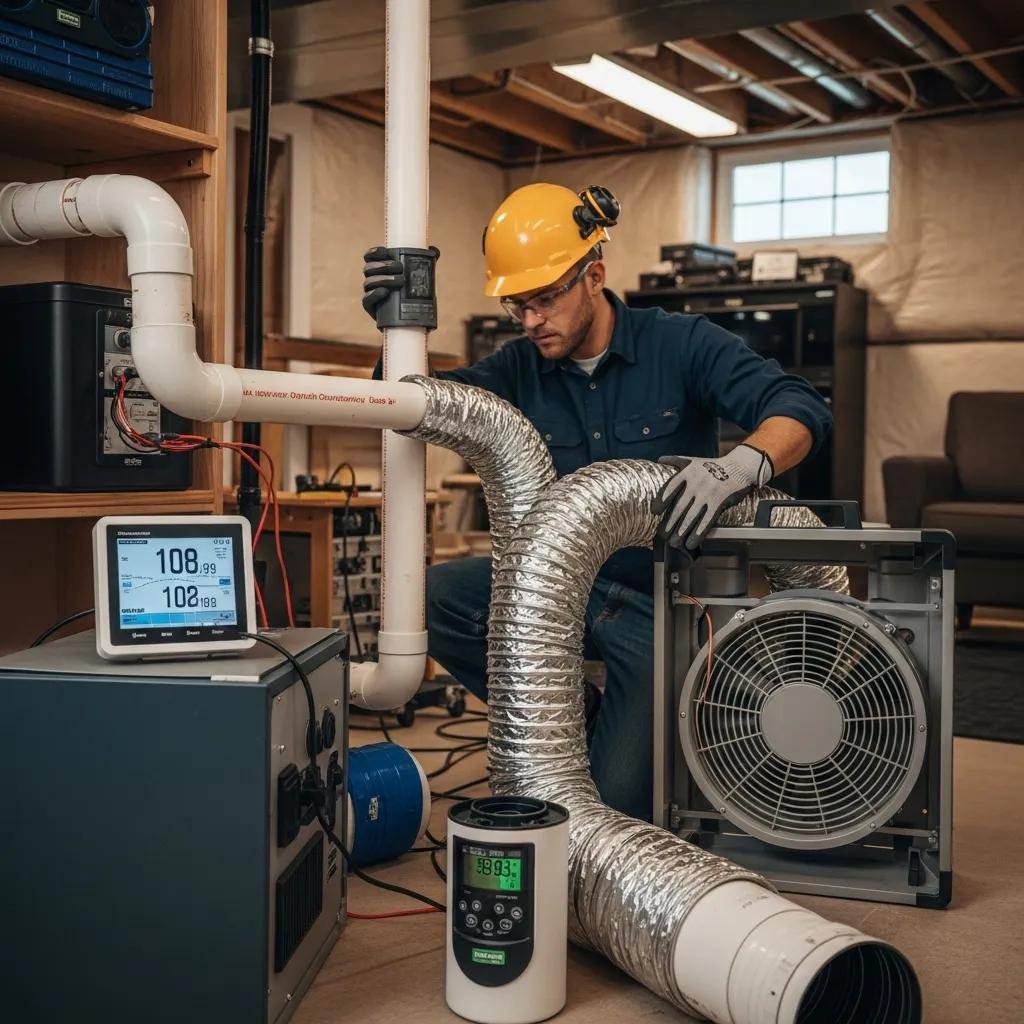
Radon mitigation follows a predictable sequence: confirm elevated levels with testing, design a system tailored to the foundation and measured pathways, install mitigation components to reverse pressure gradients and vent soil gas outdoors, and verify results with follow-up testing. The essential mechanism is creating a lower-pressure zone under the foundation that intercepts and redirects soil gas away from living spaces, which reduces indoor radon concentrations reliably when systems are properly designed. The value is durable reduction of exposure and measurable verification that indoor air is safer.
Mitigation commonly relies on sub-slab depressurization (SSD) or crawl space approaches, with selection based on foundation type and access.
Proper installation considers fan sizing, piping runs, sealant of major cracks, and routing of exhaust through roofline or sidewall to disperse gas safely.
After installation, verification testing confirms the system’s effectiveness and informs any adjustments.
The next subsections explain SSD design and when crawl space encapsulation is recommended.
Summary: Systems combine components into a functional assembly that reduces radon entry and requires modest periodic checks to ensure continued performance.
How Are Sub-Slab Depressurization Systems Designed and Installed?
A sub-slab depressurization system is designed by assessing slab type, locating suction points where the system can draw soil gas efficiently, and selecting a fan and piping layout that maintain negative pressure beneath the slab. The design process balances flow rate, static pressure, and noise considerations so the fan operates quietly while maintaining sufficient extraction.
The effectiveness of these systems, particularly sub-slab depressurization, is often tied to underlying soil conditions and building design.
Sub-Slab Depressurization Effectiveness & Soil Permeability
Sub-slab depressurization (SSD) systems in the form of radon sumps are being considered as the most effective and the cheapest radon remedial measures for existing buildings. Detailed measurements were made in 17 family houses that had been remediated using this system. Measurements results indicate that the performance of SSD systems depends substantially on the soil permeability and on the presence or absence of a drainage layer beneath the floors.
Sub-slab depressurization systems: effectiveness and soil permeability, 1999
Installation involves core-drilling a suction port, placing pipe to the fan and terminating the exhaust above the roofline or to a safe discharge area, and sealing major slab penetrations to improve system efficiency. Attention to mechanical detail and aesthetic routing ensures long-term performance and homeowner acceptance.
When is Crawl Space Encapsulation Recommended for Radon Reduction?
Crawl space encapsulation is recommended when crawl space radon readings are high, existing crawl space access allows effective sealing, or when moisture and HVAC ductwork in the crawl space complicate SSD effectiveness. Encapsulation installs a durable vapor barrier over the soil, conditions ventilation or installs sub-membrane depressurization, and often adds dehumidification or drainage improvements to control moisture. The outcome is reduced soil gas entry and improved indoor air quality, though encapsulation can be costlier and is usually used when SSD alone is insufficient or when moisture control is a co-benefit. Evaluating these factors guides whether encapsulation or an SSD-first approach is most appropriate.
How Much Does Radon Remediation Cost in Denver and What Influences Pricing?
Mitigation costs vary with foundation type, system complexity, access, and necessary sealing or repairs; typical retrofit ranges differ between slab-on-grade, finished basements, and crawl spaces. Upfront factors that raise cost include multiple suction points, long or complex routing for piping, and additional sealing or structural access work. Knowing the cost drivers helps homeowners set expectations and evaluate quotes. Many providers offer free on-site assessments to produce a firm written quote, so homeowners can compare apples-to-apples proposals.
Before the pricing table, note Martens Radon’s approach: Martens Radon provides free on-site assessments and firm written price quotes on the same day, and offers lifetime workmanship coverage while in business; typical mitigation results reported are most homes reduced to below 4.0 pCi/L, with many achieving levels below 2.0 pCi/L. This business information helps homeowners understand available guarantees and the company’s local service offering while preserving the article’s educational focus.
Summary: Exact costs depend on site specifics; a free on-site assessment is the best way to get a firm, same-day written quote tailored to a home’s foundation and access.
What Factors Affect the Price of Radon Mitigation Systems?
Several variables affect price: foundation type and finish level, the need for multiple suction points or longer piping runs, required sealing or concrete work, and accessibility constraints that increase labor. Permits, landscaping or roof penetrations, and post-installation verification testing can also influence total project cost. To plan accurately, homeowners should prepare for variations and request itemized quotes that separate hardware, labor, and testing. Understanding these factors equips homeowners to compare proposals fairly.
- Foundation type and finishes that affect access and sealing requirements.
- System complexity such as the number of suction points and piping length.
- Additional repairs, permits, or aesthetic work required during installation.
Summary: These factors explain why two homes with similar radon levels can receive different mitigation quotes and why on-site evaluation is essential.
What Does Martens Radon’s Free On-Site Assessment Include?
Martens Radon’s free on-site assessment evaluates the home’s foundation, locates likely radon entry points, discusses preliminary mitigation options, and provides a firm written price quote the same day. The assessor inspects slab and crawl space conditions, identifies optimal device placement for testing and mitigation, and outlines expected performance and warranty terms, including lifetime workmanship coverage while in business. This clear deliverable helps homeowners make informed decisions without delay. The assessment’s conclusions often form the basis for a defensible mitigation design and an accurate cost estimate.
Why Choose Martens Radon for Radon Abatement Services in Denver?
Choosing a licensed, local provider ensures adherence to state standards and familiarity with Denver-area geology and construction practices that influence mitigation success. Martens Radon is a Colorado-licensed radon mitigation company (License RMT.0000225) serving Denver metro and foothills homeowners, and their services focus on professional mitigation system installation and testing with local expertise. The benefit to homeowners is a comprehensive service model that includes free on-site assessment, same-day written quotes, independent post-test availability, and lifetime workmanship coverage while the company remains in business.
- Colorado licensing and documented professional standards provide homeowner protections and assure adherence to regulatory expectations.
- Local expertise in Denver-area foundations and soil types helps tailor system designs for reliable results.
- Clear deliverables such as a same-day written quote and post-install verification testing build confidence in project outcomes.
Summary: These factors combine to reduce homeowner risk and increase the likelihood of achieving verified reductions below target levels.
What Does Being a Colorado-Licensed Radon Professional Mean?
Being Colorado-licensed signals that a contractor meets state requirements for providing radon mitigation services and follows mandated practices for design and installation; licensing creates regulatory oversight and consumer protection. Licensed professionals are more likely to use recognized testing protocols, follow safety rules for venting radioactive gas outdoors, and maintain documented procedures useful for real-estate or regulatory needs. For homeowners, licensing translates into recourse and accountability if work is deficient, and it usually aligns with industry best practices from bodies such as NRPP and AARST. Licensing therefore supports reliable, professional outcomes.
How Does Martens Radon Ensure Lifetime Workmanship and Customer Satisfaction?
Martens Radon’s reported policy of lifetime workmanship coverage while in business commits the company to address installation workmanship issues for the duration of the company’s operations, providing homeowners with ongoing assurance. Combined with independent post-test availability and same-day written quotes, this approach emphasizes clear expectations, documented verification, and responsiveness after installation. Practically, homeowners can expect follow-up testing to confirm system performance and timely remediation of workmanship-related issues covered by the warranty. This customer-focused practice supports long-term satisfaction and verified reduction of radon exposure.
What Are Common Questions About Radon Mitigation in Denver?
Homeowners frequently ask whether radon is common locally and how mitigation affects property transactions; direct answers and practical steps reduce uncertainty and support timely action. The guidance below provides concise actions and timing considerations for homeowners, buyers, and sellers navigating testing and mitigation during transactions. Clear, actionable steps help stakeholders preserve closing timelines and ensure health protections are in place.
Is Radon Common in Denver and How Can I Protect My Home?
Yes — Colorado and the Denver metro area have a higher-than-average prevalence of elevated indoor radon, so testing every home is recommended as a routine safety measure. Immediate protective steps are straightforward: test your home using a reliable method, arrange professional testing if results are elevated or for a real-estate transaction, and install a mitigation system when levels exceed recommended action thresholds. After mitigation, verify performance with a continuous monitor or professional follow-up test and schedule periodic re-testing after major renovations. Regular attention ensures sustained indoor air safety for occupants.
How Do Radon Levels Affect Real Estate Transactions in Denver?
Radon testing is often part of buyer inspections and can influence negotiations; professional testing provides defensible results that inform whether mitigation is required and who bears the cost. Sellers may order pre-listing tests to identify issues early and present mitigation options with firm written quotes, while buyers often request post-mitigation verification before closing. Timing matters: short-term professional tests can fit within typical transaction windows, and prompt scheduling of mitigation after accepted offers preserves closing timelines. Understanding these procedural elements helps buyers and sellers manage risk while keeping transactions on track.