
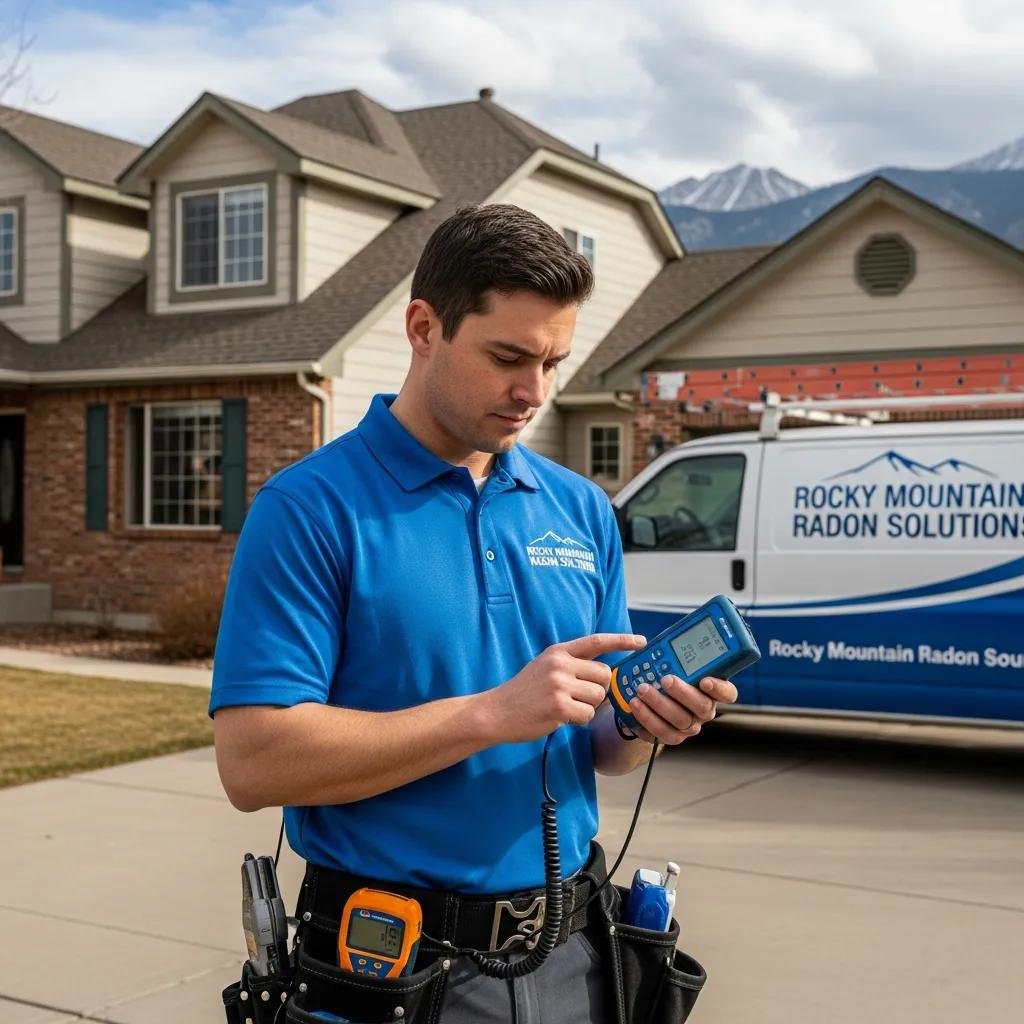
Radon Treatment Solutions for Denver Metro Homes and Businesses: Expert Mitigation and Testing Services
Radon is an invisible, radioactive gas that can accumulate inside buildings and pose a serious indoor air quality hazard in the Denver metro area. This article explains why radon matters locally, how professional radon testing and mitigation work, and which radon treatment options reliably lower indoor concentrations to safer levels. Readers will learn how exposure increases lung cancer risk, what testing choices fit homes and businesses, how common mitigation systems function, and what factors influence cost and timelines for installation. The guide also outlines commercial considerations and real estate impacts, and it highlights how licensed, local mitigation professionals handle assessments, system design, and verification testing. Throughout, the content uses current research frameworks, practical steps for property owners, and targeted guidance for buyers, sellers, inspectors, and facility managers seeking radon mitigation solutions in Denver.
What Are the Health Risks and Dangers of Radon in Denver?
Radon is a naturally occurring decay product of uranium in soil that enters buildings through foundation cracks, pipe penetrations, and soil gaps, concentrating where ventilation is limited. It emits alpha particles that, when inhaled, damage lung tissue and increase lifetime risk of lung cancer; this mechanism explains why indoor radon is treated as a preventable environmental carcinogen. Understanding local risk helps homeowners and building managers prioritize testing and mitigation to reduce long-term exposure and protect occupants. Recognizing these health risks leads directly to choosing appropriate testing methods and, when necessary, dependable mitigation solutions.
Radon enters structures primarily through ground contact points and pressure-driven soil gas flow, concentrating in basements, ground-level rooms, and HVAC return areas. Recent studies and public health guidance emphasize that cumulative exposure determines risk, so even seasonal or fluctuating levels can matter for lifetime cancer risk. These exposure dynamics make accurate measurement and sustained reduction essential steps for effective radon treatment in Denver homes and businesses.
For property owners and tenants, the most practical immediate action is to test living and working spaces and follow up with mitigation when levels exceed recommended thresholds. Professional testing informs whether a permanent system is needed and guides system design choices, which is why testing and mitigation are complementary elements of a protective radon treatment strategy.
For readers concerned about results and next steps, professional support is available: licensed mitigation contractors provide testing, system design, and mitigation options that are tailored to foundation type and building use. If you prefer a qualified local provider for testing and follow-up, Martens Radon is a Colorado-licensed radon mitigation company offering professional radon mitigation system installation and radon testing services with free on-site assessments and transparent pricing.
How Does Radon Exposure Affect Lung Cancer Risk?

Radon exposure increases lung cancer risk by emitting alpha radiation that damages DNA in airway cells after inhalation; over time, repeated damage raises the probability of malignant transformation. Epidemiological studies identify radon as the second leading cause of lung cancer after smoking, and the risk is multiplicative for smokers and former smokers, although non-smokers remain at measurable risk as well. Risk correlates with both concentration (measured in pCi/L) and exposure duration, so long-term average levels are the most informative metric for health planning. Communicating this causal pathway helps property owners appreciate why testing and mitigation are preventive measures rather than optional upgrades.
Public health agencies use lifetime risk models to translate pCi/L values into estimated cancer outcomes, which supports regulatory action levels and homeowner decision-making. These models also explain why even moderate reductions in radon concentration can meaningfully lower risk across a household over decades. Understanding the nature of risk clarifies why professional mitigation aims for levels well below common action thresholds when feasible.
What Are the Latest Colorado Radon Statistics and EPA Guidelines?
Colorado consistently reports higher-than-average indoor radon prevalence, and many counties in the Denver metro and foothills show elevated zone designations due to local geology and soil uranium content. The U.S. Environmental Protection Agency (EPA) recommends taking action for long-term average radon levels at or above 4.0 pCi/L, while some international bodies and health experts suggest lower reference levels near 2.0–2.7 pCi/L to reduce risk further. Recent state health guidance emphasizes testing all homes, using long-term measurements when possible, and mitigating where action levels are exceeded to protect occupant health.
Key takeaways for Denver-area property owners include regular testing, paying attention to both seasonal and short-term fluctuations, and prioritizing mitigation when long-term averages exceed EPA guidance or when occupants include sensitive individuals. Because Colorado trends toward higher radon potential, routine measurement and appropriate remediation form core elements of responsible building ownership and public health stewardship.
How Do Professional Radon Testing Services Work in Denver?
Professional radon testing services start with selecting an appropriate test type for the property’s use, placing monitors in standardized locations to avoid placement error, and interpreting results against EPA and state guidelines to recommend next steps. Technicians ensure correct instrument calibration, controlled placement away from drafts or windows, and chain-of-custody procedures for real estate tests, which improves reliability and legal defensibility. This structured workflow yields more dependable data than many DIY approaches, especially in complex buildings or transaction scenarios where documentation matters.
Before presenting test options, professionals explain expected timelines, how HVAC operation can affect measurements, and what constitutes a short-term versus a long-term assessment. Proper testing is the first step toward effective radon mitigation because it determines whether a permanent system is warranted and shapes system design considerations like suction-point placement and fan sizing.
Below is a practical comparison of common test types to guide selection depending on accuracy needs and use-case.
This table clarifies that short-term tests work for rapid screening while long-term and continuous monitors provide the most accurate exposure estimates for health-guided decisions.
What Types of Radon Tests Are Available for Homes and Businesses?
Several validated test formats are commonly used: short-term passive devices for quick screening, long-term passive devices that capture seasonal variability, and active continuous radon monitors that log hourly concentrations for diagnostic purposes. Short-term tests are useful when time is limited, such as during an inspection, but they may miss seasonal peaks; long-term tests better reflect average exposure and are preferred for health risk assessment. Continuous monitors allow professionals to see how HVAC operation, weather, and occupant behavior affect readings, which helps when designing mitigation systems or confirming post-installation performance. Choosing the right test depends on whether the priority is a quick screening, definitive exposure assessment, or system verification after mitigation.
Why Is Professional Radon Testing Important for Denver Properties?
Professional testing reduces the chance of false negatives or misleading results from improper placement, transient ventilation conditions, or device mishandling, and yields documentation suitable for real estate transactions and regulatory compliance. Certified testers follow protocols that standardize test location, elevation, and placement away from windows, exterior doors, and HVAC outlets, which improves comparability between properties and over time. For transactions, independent third-party tests carried out by professionals provide reliable evidence that can support negotiations, disclosures, or closing conditions. For building managers, professional testing can identify hotspots and inform targeted mitigation that minimizes disruption and cost.
For owners ready to schedule professional measurement, licensed contractors often offer free on-site assessments that explain testing options and next steps; Martens Radon provides professional radon testing services and free on-site assessments to help Denver property owners determine the right testing approach and interpret results for mitigation decisions.
What Radon Mitigation Systems Are Effective for Denver Homes and Businesses?

Effective radon mitigation reduces entry pressure differences and creates preferential pathways that vent soil gas outdoors before it enters occupied spaces, and system choice depends on foundation type, building use, and structural constraints. The most common engineered solution for slab-on-grade and basement foundations is sub-slab depressurization, which creates suction beneath the slab and routes gas outside. Crawl space approaches combine encapsulation and depressurization or sub-membrane ventilation to treat homes built over soil. Selecting the correct system balances expected reduction, noise control, aesthetics, and installation complexity to deliver reliable radon treatment tailored to Denver’s foundation types and building stock.
This comparison helps property owners understand which system types match their foundation and performance goals and why professional diagnosis matters before committing to a solution.
How Does Sub-Slab Depressurization Reduce Radon Levels?
Sub-slab depressurization works by installing suction points through the slab or into aggregate beneath the foundation, connecting flexible piping to a dedicated radon fan, and exhausting the collected soil gas above the roofline where it dilutes harmlessly into ambient air. The mechanism actively reverses the pressure gradient that would otherwise draw radon-laden soil gas into living spaces, which typically achieves large percentage reductions in indoor concentration when properly designed. Fan selection, suction-point placement, and sealing of slab penetrations influence performance and noise; these factors are addressed during a professional design and installation process. Understanding this method explains why it is the preferred radon mitigation solution for many Denver homes and small commercial properties.
When Is Crawl Space Encapsulation Recommended for Radon Mitigation?
Crawl space encapsulation is recommended when soil gas enters through the crawl space or when the crawl space construction prevents effective sub-slab suction; encapsulation includes installing a sealed vapor barrier, sealing vents and penetrations, and often adding sub-membrane depressurization. This combination reduces infiltration of radon and moisture while improving indoor air quality and energy efficiency, especially in homes with HVAC return ducts or living spaces above the crawl area. Encapsulation paired with depressurization frequently yields superior long-term control compared with sealing alone, particularly where high concentrations originate beneath the floor. Choosing encapsulation often depends on accessibility, presence of HVAC components in the crawl space, and cost-benefit considerations for the building.
How Much Does Radon Mitigation Cost in Denver and What Influences Pricing?
Radon mitigation pricing depends on foundation type, number of suction points needed, accessibility, required sealing and repairs, and whether crawl space encapsulation or other structural work is necessary; typical installation ranges vary accordingly. Costs may be higher for buildings with complex slab geometry, multiple levels, or commercial HVAC interactions that require system coordination. A free on-site assessment produces a precise scope and written quote because only a visual inspection and diagnostic testing reveal the number of suction points, routing complexity, and required sealing work. Transparent pricing helps property owners compare options and understand trade-offs between initial cost and expected long-term performance.
- Typical price ranges depend on foundation, complexity, and finishes.
- Accessibility and aesthetic routing can increase labor and materials.
- Additional work such as crawl space encapsulation or slab repairs raises total cost.
What Factors Affect Radon Mitigation System Costs in Denver?
Several factors influence mitigation cost: foundation type (slab, basement, crawl space), the number and placement of suction points, extent of sealing required to control leakage pathways, routing distance for discharge piping, and whether encapsulation or HVAC coordination is necessary for commercial spaces. Permitting and post-installation testing add modest additional costs but ensure compliance and verified performance. Accessibility challenges, such as tight crawl spaces or finished basements requiring cosmetic restoration after piping, increase labor. Understanding these drivers helps owners evaluate written quotes and select systems that balance budget, performance, and aesthetics.
This EAV-style breakdown clarifies where most cost variance arises and why on-site assessment is the only reliable way to produce a firm quote.
How Does Martens Radon Provide Transparent Pricing and Free Assessments?
Martens Radon offers free on-site assessments that inspect foundation type, measure baseline radon conditions, and produce a firm, written quote that reflects the specific scope and any recommended sealing or encapsulation work. The company emphasizes transparent pricing, lifetime workmanship coverage while in business, and clear documentation to help homeowners and businesses make informed decisions about radon treatment. Their process includes diagnostic testing, system design tailored to the property, and post-installation verification to confirm reductions in pCi/L. For Denver-area property owners seeking clarity on scope and cost, requesting a free assessment provides the necessary baseline to move forward confidently.
Why Choose Martens Radon for Radon Treatment Solutions in Denver?
Choosing a licensed, experienced mitigation contractor ensures system design aligns with local codes, proven performance goals, and aesthetic expectations, and Martens Radon is licensed in Colorado (RMT.0000225) to install mitigation systems and perform testing. The company pairs construction experience with radon-specific engineering to design systems that minimize noise, preserve home appearance, and deliver reliable reductions in radon levels. Key advantages include transparent quotes, free on-site assessments, and lifetime workmanship coverage while in business, which together support informed decisions and documented results for homeowners and facility managers. These service elements are critical for owners who need dependable mitigation with verification and clear warranties.
- Martens Radon emphasizes quiet fans and discreet routing to preserve home aesthetics.
- The team uses diagnostic testing to size systems properly and limit unnecessary equipment.
- Written documentation and post-mitigation testing verify reductions toward targeted levels.
What Expertise and Licensing Does Martens Radon Offer?
Martens Radon operates as a Colorado-licensed radon mitigation company under license RMT.0000225 and applies residential construction experience to system design and installation. This licensing indicates adherence to state regulatory standards for radon system work and supports compliance in real estate and commercial contexts. The company combines diagnostic testing with foundation-specific installation approaches to achieve predictable performance, aiming to reduce radon levels below a target of 2.0 pCi/L where feasible. Clear, documented expertise and licensing help property owners select a contractor capable of producing verifiable results and appropriate paperwork for transactions.
How Does Martens Radon Ensure Quiet, Reliable, and Aesthetic Systems?
Martens Radon addresses noise and aesthetics by selecting low-vibration fans, locating equipment in acoustically favorable places, and routing piping along less visible paths or finishing piping to blend with building surfaces. Reliability is achieved through quality components and workmanship practices that minimize air leakage, ensure secure suction points, and permit straightforward access for service. Aesthetic considerations include neat exterior discharge placement and interior finishing around penetration points to minimize visual impact. For clients who value quiet operation and an unobtrusive system, these design and installation practices balance performance with residential and commercial appearance expectations.
What Are Commercial Radon Solutions and Real Estate Considerations in Denver?
Commercial properties and real estate transactions introduce additional layers of complexity: larger footprints, mechanical ventilation interactions, occupancy patterns, and contractual disclosure responsibilities all influence testing and mitigation choices. System sizing for commercial spaces often requires multiple discharge points, coordination with HVAC systems to avoid pressure conflicts, and collaboration with facility managers to schedule installation with minimal operational disruption. For real estate transactions, timing of tests, the format of documentation, and negotiated responsibilities for mitigation or credits must be managed to keep closings on track while protecting occupant health. Addressing these factors early reduces surprises for buyers, sellers, and landlords.
Key commercial and transactional considerations include system scaling, documented post-mitigation verification, and appropriate disclosure practices for closings.
How Are Radon Mitigation Services Tailored for Businesses in Denver?
Commercial mitigation begins with load and footprint analysis to determine how many suction points and what fan capacity are needed, and it accounts for interactions with building HVAC that can otherwise undermine system performance. Coordination with building engineers, scheduling during low-occupancy periods, and planning for aesthetic and code-compliant discharge locations are part of a successful commercial installation. A concise checklist for business owners includes evaluating occupied zones, checking HVAC return locations, and ensuring accessible routings for piping and fans. This tailored approach reduces downtime and ensures mitigation integrates with existing building operations.
What Should Buyers, Sellers, and Inspectors Know About Radon in Real Estate?
During transactions, parties should agree on test timing (often during inspection period), whether a short-term or long-term test is appropriate, and how mitigation responsibilities will be handled if levels exceed thresholds. Inspectors must document test placement and results; buyers and sellers should request post-mitigation verification testing when systems are installed. Clear, written mitigation scopes and verification reports support disclosure and closing requirements, while free on-site assessments can clarify expected scope and cost before negotiations. These practices protect transaction timelines and ensure radon issues are resolved with verifiable, documented outcomes.
- Test early in the inspection window to allow time for mitigation if needed.
- Require professional documentation for transaction reports and disclosures.
- Confirm post-mitigation verification to ensure levels meet agreed criteria.